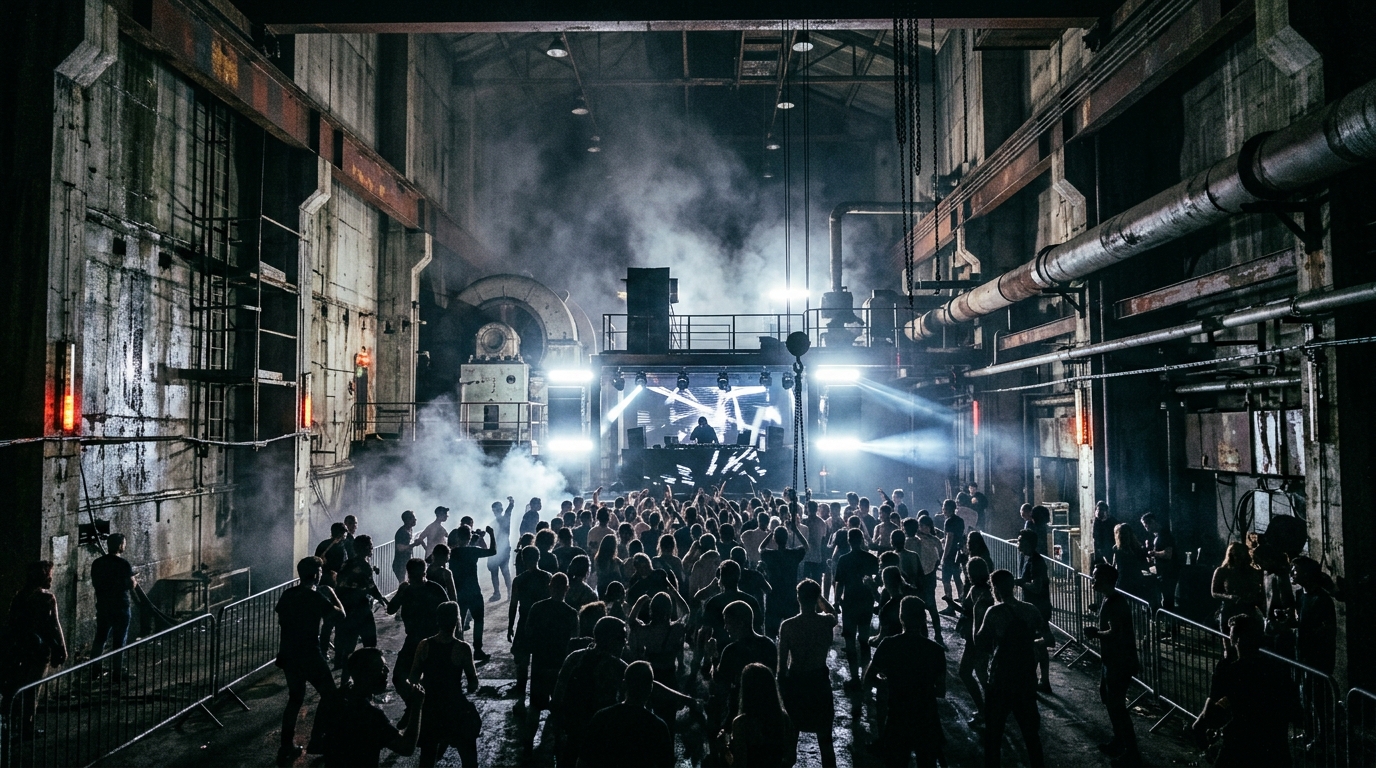
In March 1991, while the political architects of a reunified Germany were still debating legal treaties, a young music promoter named Dimitri Hegemann slipped into the bombed-out basement ruins of the former Wertheim department store on Leipziger Straße. The site lay in what had been the barren death strip of the Berlin Wall just months prior. Prying open heavy blast doors in the pitch black, Hegemann and his friends discovered hundreds of abandoned, bullet-scarred safe-deposit boxes lining the concrete walls. They dragged in heavy sound monitors, rigged up industrial strobe lights, and named the space Tresor (the German word for "safe" or "vault").
More than three decades later, Tresor is not merely a nightclub; it is the spiritual home and institutional bedrock of global techno culture. When post-reunification youth from East and West Berlin had no common social framework, they found unity inside Tresor’s foggy, strobe-lit basement. The relentless four-four beat became the soundtrack of German reunification, creating a shared subculture that helped make Berlin a global center for electronic music.
For a more intimate, music-focused experience without the peak Saturday night queue, attend Tresor’s legendary Wednesday night "New Faces" showcase or Friday "Klubnacht." Arrive between midnight and 1:00 AM. Tresor's door staff is welcoming compared to Berghain, but you must demonstrate a calm demeanor, respect for the space, and basic awareness of the artists performing. Cash remains king—bring euros for admission and bar tokens.
The Detroit-Berlin Axis: A Sonic Revolution
What elevated Tresor from a local squatter dancehall into a global phenomenon was its revolutionary cross-Atlantic partnership with Detroit techno. In the early 1990s, Black electronic music pioneers in Detroit—including Jeff Mills, Robert Hood, "Mad Mike" Banks, and Juan Atkins—were innovating a futuristic, stripped-back machine soul that was largely ignored by mainstream American commercial radio.
Hegemann invited these Detroit visionaries to Berlin, offering them residencies, recording contracts on the nascent Tresor Records imprint, and an ecstatic, uninhibited audience. Artists like Jeff Mills, performing with three turntables at relentless 135+ BPM tempos, found their artistic home behind Tresor's metal bars. This profound "Berlin-Detroit Axis" defined the sonic DNA of modern electronic dance music and established a cultural lineage that is still celebrated in the club today.
The Power Plant Resurrection: Kraftwerk Berlin
In 2005, corporate real estate developers demolished the original Leipziger Straße vault to construct commercial office towers. Yet Tresor refused to die. In May 2007, after two years of searching and painstaking reconstruction, the club reopened inside a cavernous industrial space: the decommissioned Kraftwerk Berlin combined-heat-and-power plant on Köpenicker Straße in Mitte.
Built between 1961 and 1964 to supply heat to East Berlin's government quarters, the massive concrete turbine hall spans over 8,000 square meters with 30-meter-high ceilings. Hegemann preserved the raw, monolithic concrete architecture, painstakingly re-installing the original steel bank deposit vaults and security bars from the 1991 club into the plant’s subterranean tunnels.
Navigating the Floors: The Vault, Globus, and +4Bar
A night inside Tresor unfolds across multiple distinct architectural and sonic environments:
- The Vault (Tresor Floor): Accessed through a narrow, 30-meter-long concrete tunnel, the lower vault is pure sensory deprivation. Heavy steel bars enclose the DJ booth, dense fog machine haze limits visibility to inches, and blinding minimalist white and red strobe lights flash in synchronization with crushing, hypnotic industrial techno.
- Globus: Located on the upper level, Globus provides a warm, organic contrast. Featuring polished wooden floors, velvet curtains, and expansive views into the power plant atrium, this room focuses on soulful house, deep grooves, and experimental disco.
- +4Bar: Perched higher within the industrial framework, this intimate space serves artisan cocktails against the backdrop of giant suspended steel pipes and concrete hopper silos.
- The Outdoor Garden: During the warmer months, the tree-shaded courtyard along Köpenicker Straße provides an essential open-air sanctuary where clubbers recharge between marathon dance sessions.
Door Policy, Etiquette, and Safe Space Principles
Tresor operates on a strict set of values designed to protect the integrity of the dance floor:
- No Photo Policy: Like most authentic Berlin clubs, all phone camera lenses are covered with tamper-evident colored stickers at the door. Photography and filming are strictly prohibited to ensure total freedom and privacy for dancers.
- Zero Tolerance for Harassment: Tresor is an inclusive space. Racism, homophobia, transphobia, sexism, and non-consensual touching result in immediate, permanent expulsion. An active awareness team (Awareness-Team) is on duty throughout the night.
- Dress Code: There is no strict "black leather only" uniform, but leave collared corporate shirts, dress shoes, and flashy luxury logos at home. Comfortable dark clothing, sneakers, and breathable fabrics suited for intense dancing are the universal standard.
Tresor Berlin Visitor Essentials
- Location: Köpenicker Straße 70, 10179 Berlin (Mitte).
- Opening Nights: Wednesdays (New Faces), Fridays (Klubnacht), Saturdays (Klubnacht); doors open at 11:59 PM and run past noon the following day.
- Public Transit: U-Bahn U8 to Heinrich-Heine-Straße or S-Bahn / U-Bahn to Jannowitzbrücke (approx. 5-minute walk).
- Admission: Standard entry approx. €15–€20; tickets available at the door (cash only).
- Ear Protection: The sound system in the subterranean vault is extremely powerful and bass-heavy; earplugs are highly recommended and can be purchased at the cloakroom.
Authoritative Club Culture Resources
To view upcoming weekend timetables, record release archives, and club safety charters, consult these official portals:
- Tresor Berlin Official Portal – Weekly event lineups, resident DJ profiles, and Tresor Records discography.
- Kraftwerk Berlin Official Site – Architecture history, art exhibitions, and cultural festival programming in the former power plant.
- VisitBerlin: Official Guide to Tresor – Practical visitor details, safety guidelines, and municipal transit connections.
Comments