A few miles south of Angels Camp in Calaveras County, the rolling oak woodlands of the Sierra Nevada foothills give way to a quiet limestone ridge. On the surface, there is little to suggest that beneath your boots lies the largest single vertical cave chamber open to the public in California.
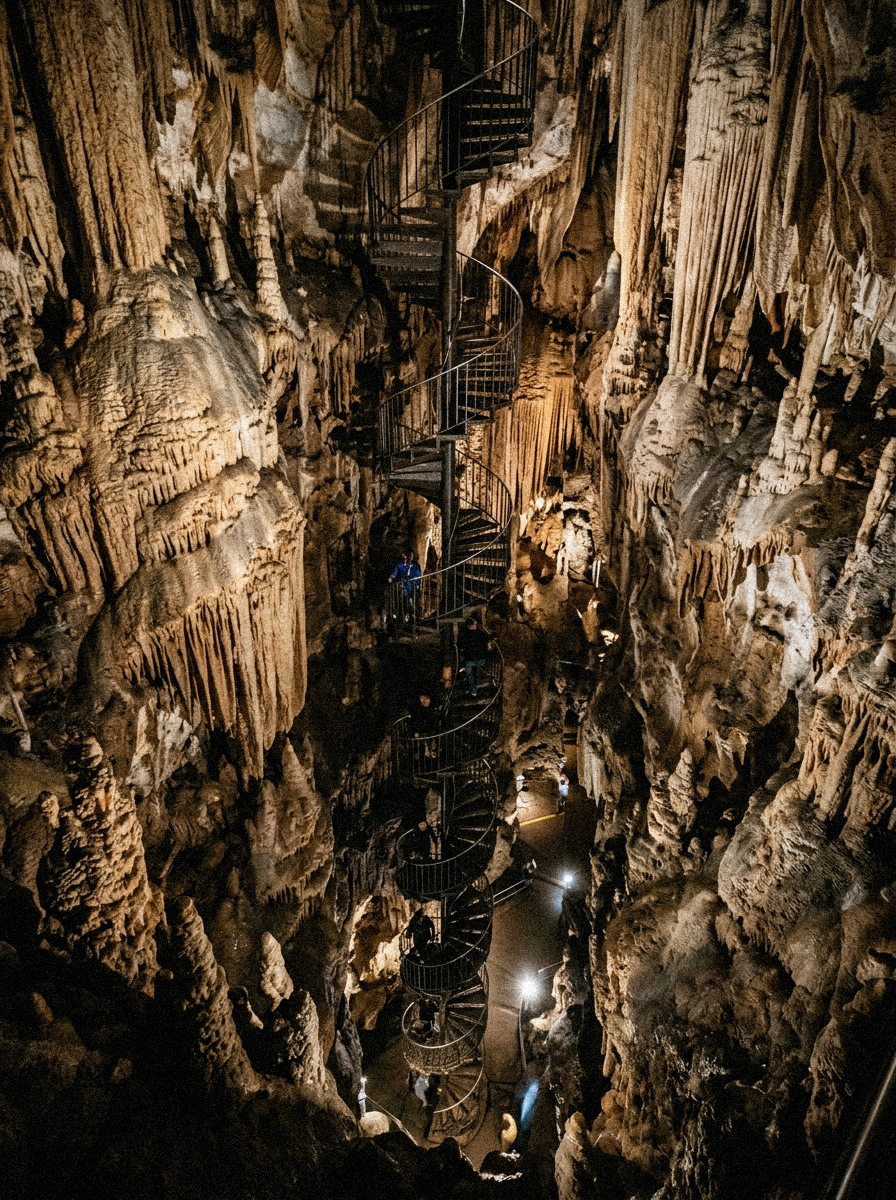
Step onto the viewing platform inside Moaning Caverns, however, and the solid ground drops away into a 165-foot vertical abyss. The main room is so vast that the Statue of Liberty could stand comfortably on the cavern floor without touching the vaulted ceiling.
Suspended directly through the center of this void is an engineering curiosity: a freestanding, ten-story spiral staircase built in 1922 out of scrap metal salvaged from a dismantled World War I battleship. Descending its 144 open-grate steps is one of the most memorable subterranean adventures in the Gold Country.
The Sound in the Earth: Miwok Lore and the Natural Pitfall
For centuries before European arrival, the Central Sierra Miwok were well aware of the fissure in the limestone ridge. They called the cave Yahyhi and treated the opening with deep reverence and caution.
During winter and early spring, changing atmospheric pressure and groundwater dripping through natural stone chimneys compressed air inside the vertical shaft. As the pressurized air rushed out through the narrow mouth of the cave, it produced a hollow, rhythmic drumming and moaning sound that could be heard miles away across the valley. Miwok oral history warned against approaching the hole, describing it as the lair of a spirit that lured travelers into the earth.
Geologically, the cave functioned as a natural pitfall trap for thousands of years. Animals roaming the chaparral—including prehistoric Columbian mammoths, saber-toothed cats, and dire wolves—occasionally slipped through the narrow surface fissure, plunging over 150 feet to the talus slope below.
In the early 1950s, University of California archaeologists excavating the lower talus cone made an extraordinary discovery: more than one hundred human skeletons buried beneath layers of limestone silt and encased in calcite flowstone. Carbon dating and fluorine analysis revealed that some of the skeletal remains dated back approximately 12,000 years, establishing Moaning Caverns as one of the oldest dated human burial and pitfall sites in North America.
Gold Rush Miners and the 1922 Battleship Staircase
During the California Gold Rush, prospectors fanned out across Calaveras County hunting for placer deposits. In October 1851, a miner named J.M. Martin tracked a wounded deer to the cave mouth and peered into the darkness. Thinking the deep cavern might conceal rich gold veins in its lower bedrock, early miners rigged hemp ropes, windlasses, and wooden buckets to lower themselves into the blackness.
They found no gold—the cavern is formed from soluble marine limestone and recrystallized marble, not gold-bearing quartz veins—but they did recognize its potential as a natural wonder. For decades, intrepid visitors were lowered down the damp shaft in an ore bucket suspended by a single rope cable, illuminated only by handheld tallow candles.
In 1922, entrepreneur Addison Carley sought a safer, permanent way for the public to enter the chamber. Because commercial timber was prone to rotting in the damp 54-degree cavern environment, Carley turned to heavy steel scrap.
Following World War I, the United States scrapped several naval warships in San Francisco Bay under the terms of the Washington Naval Treaty. Carley purchased structural plate iron, pipe, and steel girders from a dismantled warship, hauled the material by horse team to Vallecito, and lowered the pieces down the cave entrance.
Working without modern power tools, Carley and his crew assembled a 100-foot, self-supporting spiral staircase inside the vertical chamber. Anchored into the cavern bedrock at the top and base, the staircase winds downward through open air without touching the cave walls. Over a century later, the battleship-steel staircase remains the primary route down into the main chamber.
The spiral staircase tour is suitable for most reasonably fit visitors, but it involves 144 spiral stairs down and 144 stairs back up with open-mesh steel treads. If you experience severe vertigo, keep your eyes focused on the center steel support column rather than gazing down into the cavern floor. The cave maintains a steady 54°F (12°C) temperature year-round with high humidity, so a light fleece jacket and sturdy closed-toe shoes are essential.
Geology of the Marble Belt
Moaning Caverns is part of the Calaveras Complex, a band of late Paleozoic limestone and marble that was originally laid down as coral reefs and marine sediments along an ancient ocean trench hundreds of millions of years ago. Tectonic collisions plastered this marine terrane onto the North American continental margin, where subterranean heat and pressure recrystallized the limestone into dense, banded marble.
Slightly acidic rainwater percolating through surface soil dissolved fractures in the marble over millions of years, hollowing out the vertical chamber. Today, the walls display active speleothems:
- Flowstone & Draperies: Mineral-rich water sheeting down the vertical rock face has deposited rippling curtains of calcite known as "cave bacon" and massive flowstone mounds.
- Stalactites & Soda Straws: Delicate hollow mineral tubes hang from the high ceiling, growing at a glacial rate of approximately one cubic inch every one to two centuries.
- The Chocolate Cataract: Iron oxide and manganese minerals washed into the cave during ancient storm cycles have tinted sections of the flowstone deep amber, chocolate brown, and creamy white.
The Adventure Options: Spiral Staircase vs. Wild Caving
Moaning Caverns offers two distinctly different experiences depending on your appetite for adventure:
1. The Walking Spiral Tour (45 Minutes)
The standard guided walking tour takes visitors down the wooden access tunnel and onto the historic spiral staircase. A guide explains the cavern’s archaeological finds, demonstrates how the sound was formed (the natural moaning stopped when modern stairs altered air flow in the upper fissure), and allows visitors to stand on the lower observation platform 165 feet below the surface.
2. The Wild Caving Expedition (3 Hours)
For experienced adventurers not prone to claustrophobia, the park conducts a guided wild caving crawl through the undeveloped, unlit lower chambers. Outfitted with headlamps, helmets, heavy coveralls, and kneepads, cavers squeeze through tight, unmapped fissures with names like the Meatgrinder, the Chimney, and the Pancake Squeeze—a horizontal crawlway barely twelve inches high. It is a genuine spelunking expedition that requires scrambling over bare marble, chimneying between rock walls, and belly-crawling through ancient mud deposits.
Visitor Logistics & Exploration Details
- Location: 5350 Moaning Cave Road, Vallecito, CA 95251 (located off Highway 4 between Angels Camp and Murphys).
- Hours: Open daily year-round from 9:00 AM to 5:00 PM (weather and seasonal operations permitting).
- Tour Bookings: The walking spiral tour runs on regular intervals throughout the day; walk-ins are accepted, but advance reservations are strongly recommended on summer weekends. Wild caving expedition tours must be booked several days in advance.
- Nearby Pairing: Combine your cave tour with a visit to historic downtown Murphys (famous for its Gold Rush stone storefronts and wine tasting rooms) or Mercer Caverns near Murphys for a comparison of Sierra limestone formations.
Comments