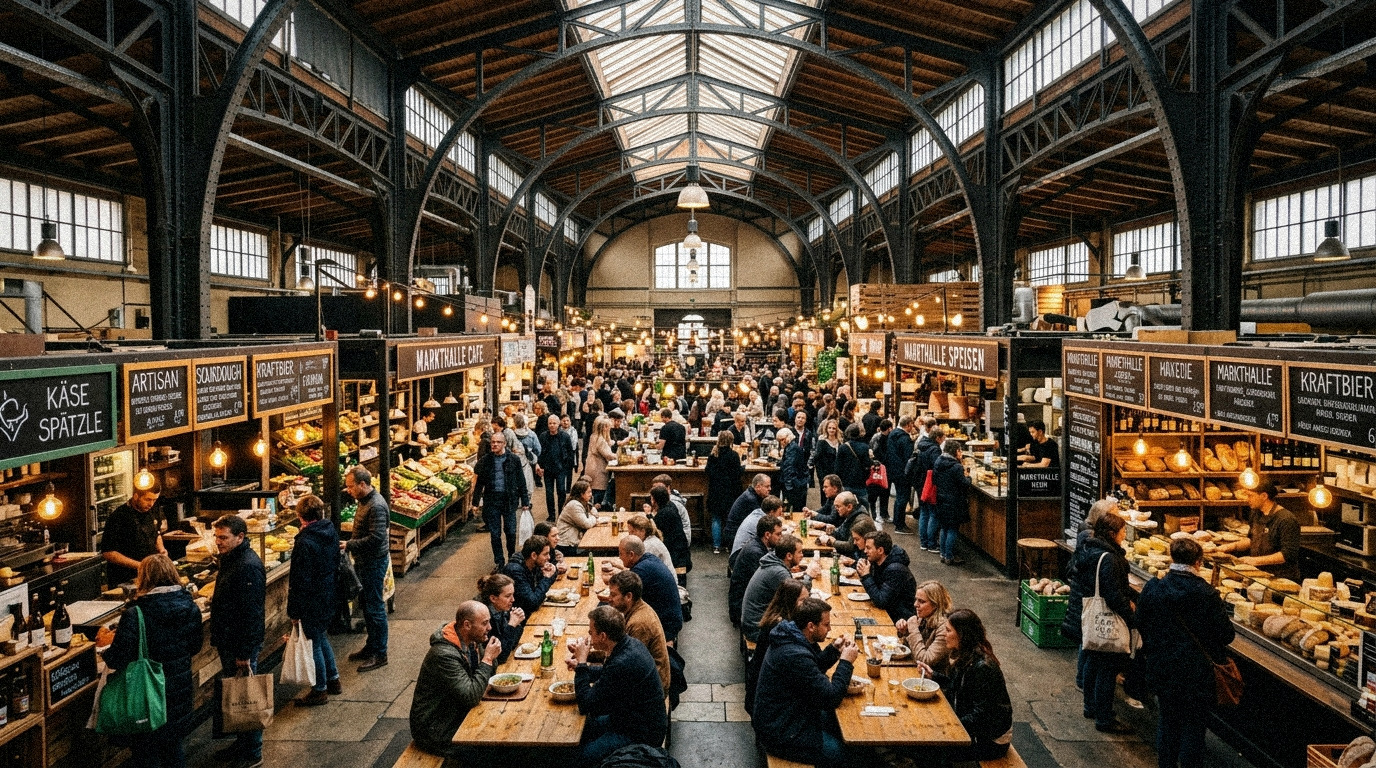
Pushing through the heavy plastic strip curtains on Eisenbahnstraße in Kreuzberg on a Thursday evening, your senses are instantly ambushed. The air is thick with the scent of sizzling Korean pork belly, toasted cumin from Syrian flatbreads, woodsmoke, and fresh, malt-heavy brewer's wort drifting up from the basement. Beneath soaring 19th-century cast-iron roof trusses, hundreds of locals and travelers stand shoulder-to-shoulder at rough wooden trestle tables, clinking glasses of unfiltered craft IPA and devouring hand-pulled noodles.
This is Markthalle Neun (Market Hall IX), the beating, unpretentious culinary heart of Berlin-Kreuzberg. While Berlin has no shortage of trendy dining strips and hip coffee outposts, Markthalle Neun occupies a unique, revered place in the capital's cultural landscape. It is not merely a gourmet food court; it is a hard-won monument to grassroots community resistance, urban food sovereignty, and the revival of traditional craftsmanship in an era of hyper-industrialized supermarket chains.
The 2009 Rebellion: Halting the Discount Supermarket Juggernaut
Opened in October 1891, Markthalle Neun was one of fourteen municipal covered market halls commissioned by the City of Berlin to bring hygienic, centralized food distribution to the explosive working-class neighborhoods of the industrial empire. Most of those fourteen halls were pulverized by Allied air raids in World War II or demolished in the 1960s to make way for suburban-style department stores and parking lots. Markthalle Neun survived, but by the dawn of the 21st century, it was a hollowed-out ghost of itself—its historic booths replaced by a cheap discount grocery store and bingo parlor.
In 2009, the Berlin state real estate agency announced plans to put the property up for auction to the highest bidder. International developers circled, preparing to bulldoze the interior to install a massive discount supermarket mall with subterranean parking.
Kreuzberg, long the epicenter of Berlin's counterculture, squatters' movements, and political protests, fought back. A dedicated coalition of neighborhood activists, food producers, and urban planners formed the Projektgruppe Markthalle Neun (led by Nikolaus Driessen, Bernd Maier, and Florian Niedermeier). Instead of a conventional bid, they presented the city with an audacious, community-backed counter-proposal:
- The Concept Over Price Mandate: In a landmark victory for Berlin civic activism, the city agreed to sell the historic hall not to the highest corporate bidder, but based on the quality and social sustainability of the proposed urban concept.
- Slow Food Philosophy: The mandate decreed that the hall would support regional organic agriculture from Brandenburg, celebrate traditional food production, offer fair living wages to independent artisans, and remain an accessible, public neighborhood living room.
Street Food Thursday: The Spark That Ignited Germany’s Food Revolution
In 2013, the founders launched an experimental weekly event called Street Food Thursday. At the time, German street food was largely confined to standardized currywurst stands and late-night doner kebab windows. Markthalle Neun shattered that mold.
The organizers invited home cooks, recent immigrants, experimental pop-ups, and passionate culinary artisans who lacked the capital to open a brick-and-mortar restaurant to set up temporary stalls under the iron arches. The response was explosive. Within months, Street Food Thursday became an international cultural phenomenon. It is universally recognized as the catalyst that triggered Germany's modern artisanal food renaissance, introducing Berliners to authentic Nigerian fufu, Mexican birria tacos, Taiwanese bao buns, Peruvian ceviche, and artisanal British meat pies.
The Resident Artisans: Heidenpeters and Sironi
While weekly events draw energetic crowds, Markthalle Neun’s soul rests on its permanent, resident food artisans who operate daily:
- Brauerei Heidenpeters: Tucked into the brick cellar vaults and rear corner of the hall, independent brewer Johannes Heidenpeter established his microbrewery in 2012. Rejecting the rigid commercial conservatism of the German Reinheitsgebot, Heidenpeters brews unpasteurized, unfiltered American-style pale ales, hazy IPAs, tart Berliner Weisses, and rich stouts right on the premises. Grabbing a freshly pulled pint at the tiled cellar bar is an essential Kreuzberg ritual.
- Sironi – Il Pane di Milano: In 2013, Italian master baker Alfredo Sironi arrived from Milan and built a massive stone-deck oven in the center of the hall with a completely open, glass-walled bakery. Through the glass walls, you can watch the bakers dust flour and pull dark-crusted sourdough loaves, golden rosemary focaccia, and airy Roman-style pizza al taglio straight from the deck ovens.
- The Butcher and Cheese Affineurs: Traditional whole-animal butchers (Kumpel & Keule) practice transparent butchery behind glass, while cheesemongers curate raw-milk cheeses sourced directly from small alpine meadows and Brandenburg farmsteads.
Street Food Thursday (5:00 PM – 10:00 PM) is exhilarating but notoriously packed; by 7:00 PM, finding an open seat is nearly impossible. For a relaxed, authentic neighborhood experience, visit on a Friday or Saturday morning during the Weekly Farmers Market (Wochenmarkt). The hall is quiet, sunlight filters through the high clerestory windows, and you can enjoy an espresso and fresh pistachio cornetto from Sironi while chatting directly with local Brandenburg vegetable and cheese farmers.
The Tension: Community Market vs. Tourist Magnet
Markthalle Neun’s immense global popularity has brought inevitable challenges. In heavily gentrifying Kreuzberg 36, local residents have at times protested rising food prices inside the hall, expressing concern that their everyday produce market was morphing into an exclusive gourmet playground for affluent tech expats and international food tourists.
The founders have actively responded to these concerns:
- The Tuesday "Basismarkt": Every Tuesday, the hall hosts a traditional low-cost produce market offering affordable, fresh fruits and staples for neighborhood families on fixed budgets.
- The Markthalle Neun Cantine: The on-site kitchen serves daily hot, seasonal lunch plates for local school children, workers, and seniors at subsidized, accessible prices.
- Educational Workshops: The hall regularly hosts cooking workshops, youth taste laboratories, and agricultural debates connecting urban consumers with rural soil ecology.
Actionable Logistics: Planning Your Visit
Here is how to navigate Markthalle Neun smoothly:
- Location & Transit: Eisenbahnstraße 42/43, 10997 Berlin (Kreuzberg). Take the U-Bahn line U1 or U3 to Görlitzer Bahnhof station, exit toward Lausitzer Platz, and walk five minutes north down Manteuffelstraße to Eisenbahnstraße. Alternatively, take the bus 140 to Wrangelstraße.
- Weekly Schedule & Opening Hours:
- Regular Market Days: Tuesday–Saturday: 10:00 AM – 6:00 PM.
- Street Food Thursday: Thursdays: 5:00 PM – 10:00 PM (arrive by 5:15 PM for short queues and prime tables).
- Weekly Farmers Market (Wochenmarkt): Fridays 12:00 PM – 6:00 PM, Saturdays 10:00 AM – 6:00 PM.
- Special Theme Sundays: Monthly festivals dedicated to Cheese (Cheese Berlin), Artisanal Coffee, Breakfast Markets, or Sausage (Wurst & Bier). Closed regular Sundays and Mondays.
- Payment Etiquette: Many stalls now accept contactless debit/credit cards, but several small farm producers and drink counters remain strictly cash-only (Nur Barzahlung). ATMs are located outside along Wrangelstraße.
Comments